Quick Navigation
- So Does Salcombe Have a Beach?
- The Two You Can Drive To
- North Sands — the nearer, calmer one
- South Sands — the one with a ferry to itself
- The Ones You Reach by Ferry and On Foot
- Round Bolt Head: Starehole Bay and the Wilder Coast
- Just Along the Coast: Hope Cove and Soar Mill Cove
- Every Beach, at a Glance
- Common Questions
- Does Salcombe have a beach?
- Is the beach in Salcombe sandy?
- What are the best beaches near Salcombe?
- Can you walk to the beaches across the estuary from Salcombe?
- Are Salcombe's beaches covered at high tide?
- Is there a beach you can drive straight to in Salcombe?
Salcombe has two beaches you can drive to and several more you cannot, and that second group is most of what makes this coastline good. Ask whether Salcombe has a beach and the honest answer is that it has at least eight, spread across an estuary mouth and a stretch of coast path, and the right one for you depends on whether you are willing to take a ferry or lace up boots. Stay in the town and both road-access beaches are a short drive or walk away, so places to stay in Salcombe are the easy starting point.
So Does Salcombe Have a Beach?
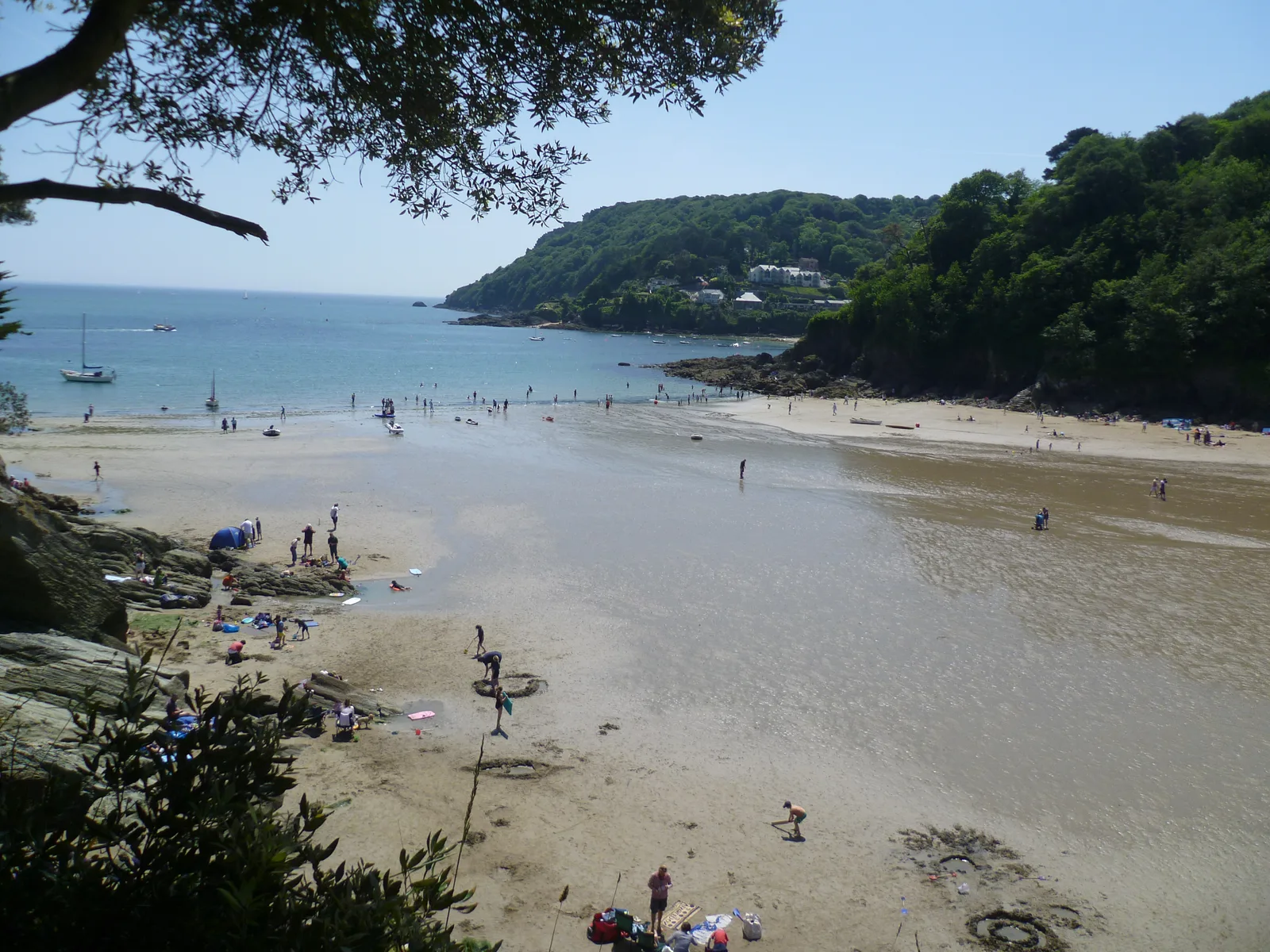
Yes, several, and the confusion online usually comes from people describing only the two nearest the town. North Sands and South Sands sit either side of the same short headland south of Salcombe, both reachable by road and both genuinely sandy at low to mid tide. That is where most first-time visitors stop looking.
It is also where they stop finding beaches, because everything past those two involves either a ferry, a boat, or a walk on the South West Coast Path. None of that is a warning — a beach you cannot drive to is usually the quieter one — but it changes how you plan the day, and nobody tells you that part in advance.
The Two You Can Drive To
North Sands and South Sands are both a short drive or a level walk along Cliff Road from the centre of Salcombe, each with its own car park, and each covered completely by the sea at high water. Time a visit around the tide table, not the clock.
| Beach | Getting there | What it is like |
|---|---|---|
| North Sands | Drive, or a 15-minute walk along Cliff Road | Sheltered and gently shelving, with a car park and a café behind the sand |
| South Sands | Drive, walk, or the seasonal ferry and sea tractor from Salcombe town | Open to the estuary mouth, with watersports hire and two hotels on the beach itself |
North Sands — the nearer, calmer one
Tucked below a wooded slope with the ruins of Fort Charles on the headland, North Sands is the beach families default to for exactly that reason: it is close, it is out of the swell, and the water stays calm enough for young or nervous swimmers most of the year.
South Sands — the one with a ferry to itself
South Sands sits a little further along the same road, facing straight out towards the estuary mouth. From late March to the end of October, the South Sands Ferry runs a passenger boat and its own sea tractor between Salcombe town and the beach roughly every half hour, so you do not have to drive or walk if the tide or the car park says otherwise.
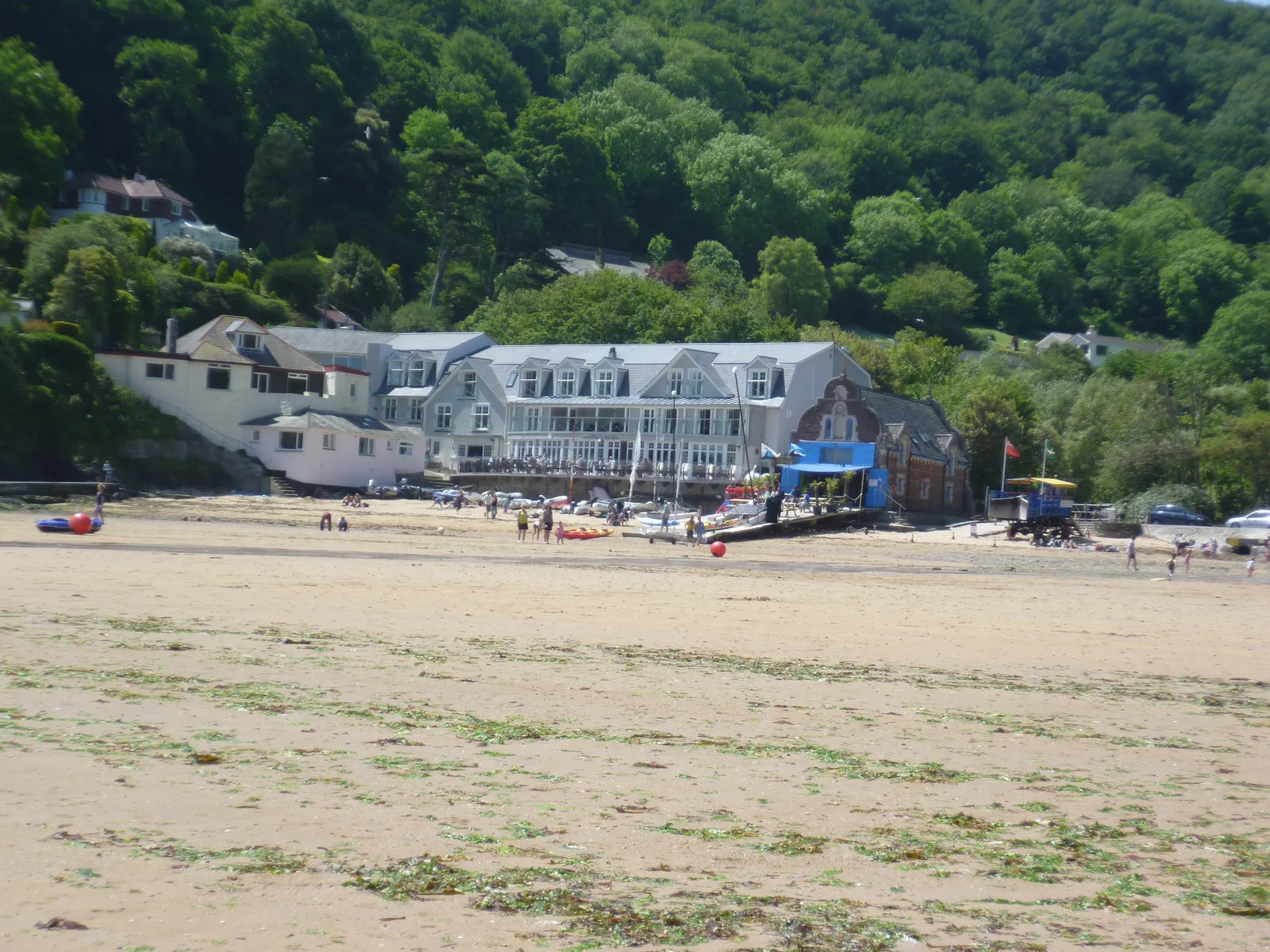
South Sands Hotel sits directly on South Sands, which is about as close to a beach as a Salcombe stay gets — useful if the plan for the week is simply not walking anywhere in the morning.
Past those two, every beach in reach of Salcombe is a ferry, a boat, or a walk away — never a car park.
The Ones You Reach by Ferry and On Foot
The far shore of the estuary has its own cluster of beaches, and none of them has a road to it. The Salcombe to East Portlemouth ferry runs every day of the year, roughly every half hour, in a crossing of about five minutes — the way in for all of them.
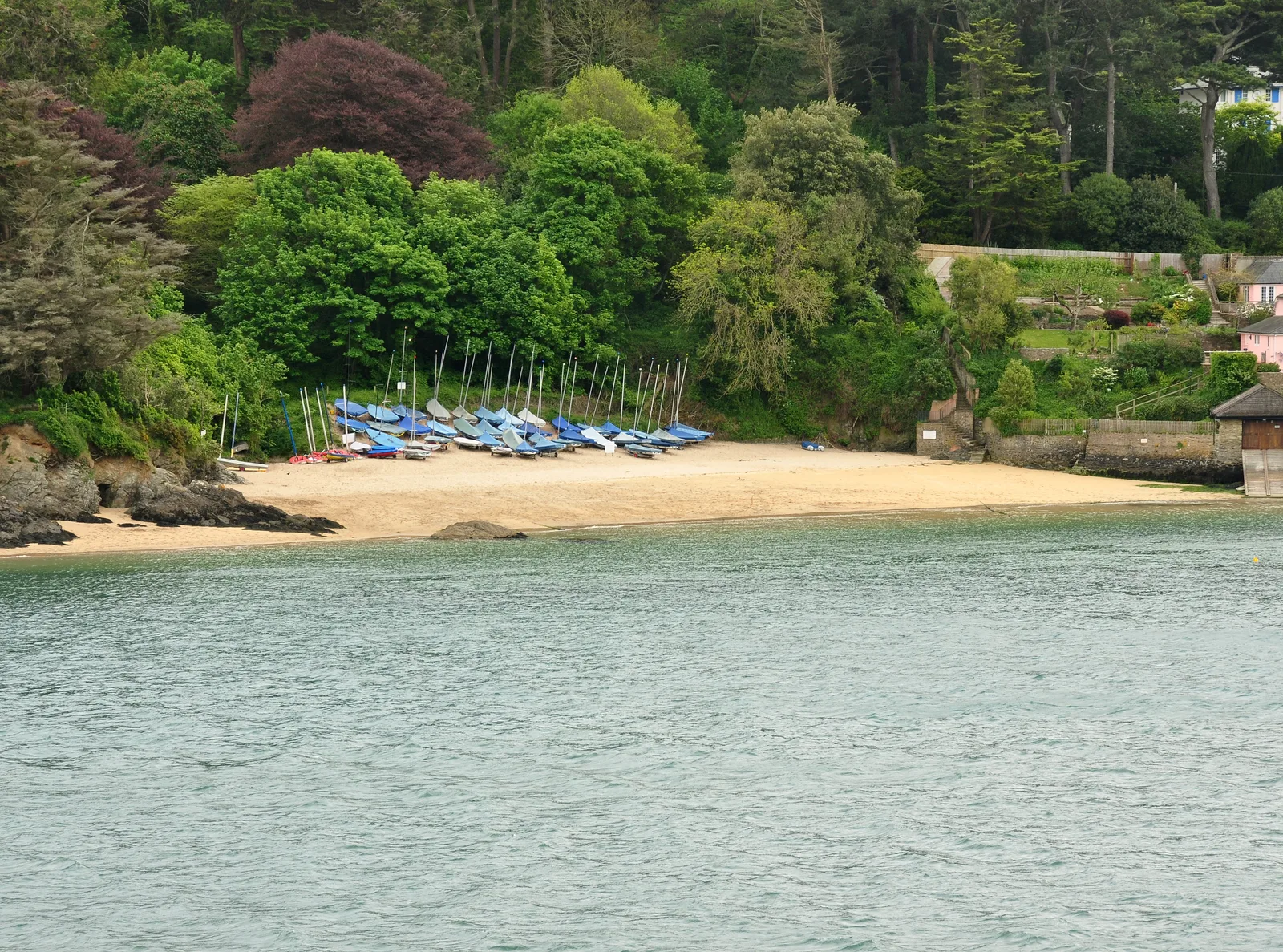
- Mill Bay — five to ten minutes on foot from the ferry landing, along the road or across the sand at low tide. The most accessible of the far-shore beaches, and the one families with small children tend to head for first.
- Sunny Cove — a further stretch along the coast path past Mill Bay, with no road access at all. Quieter than Mill Bay simply because fewer people walk that far.
- Seacombe Sands and Rickham Sands — reached by continuing the coast path around Rudder Cove, part of a roughly 3.5-mile circular walk from Mill Bay through woodland and clifftop. The furthest of the group, and usually the emptiest.
Plan around the ferry, not just the beach. The East Portlemouth crossing runs less often outside the summer season, and the coast path back from the furthest coves takes longer than it looks on a map. Check the current sailing frequency before you commit to the far end of the walk.
Round Bolt Head: Starehole Bay and the Wilder Coast
From South Sands, the coast path climbs through the National Trust gardens at Overbecks and on towards Bolt Head, a dramatic run of rocky headland with no direct road access anywhere along it. Starehole Bay sits tucked beneath the point, reachable only on foot.
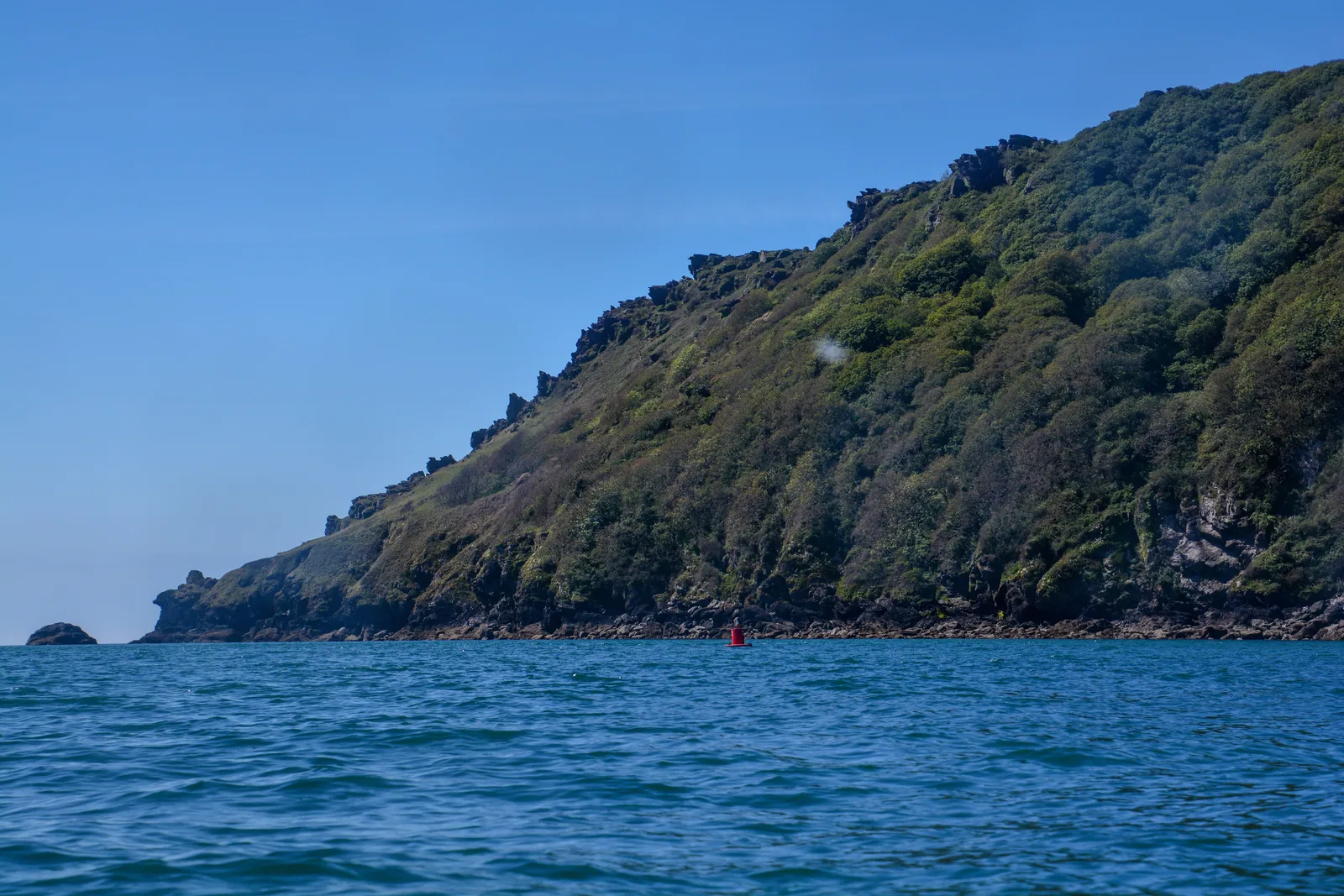
This is not a beach for a picnic and a paddle. It is rocky rather than sandy in places, exposed to the swell, and the walk in from South Sands is the best part of an hour each way. Go for the view and the sense of having the coast to yourself, not for a swim with young children.
Just Along the Coast: Hope Cove and Soar Mill Cove
Widen the search a little and two more beaches are worth the drive. Hope Cove has two of its own — Mouthwell Sands at Outer Hope and Harbour Beach at Inner Hope — each with a car park in the village, and places to stay in Hope Cove a few minutes from either.
Soar Mill Cove, between Salcombe and Hope Cove, has no direct road at all: it is a walk down from a National Trust car park at Bolberry Down, through a wooded valley to a small, sheltered cove.
The seasonal dog restrictions on some of these beaches are a separate question from access, and worth checking before you go — we cover the rules beach by beach in our guide to Salcombe with a dog.
Every Beach, at a Glance
Common Questions
Does Salcombe have a beach?
Yes, several. North Sands and South Sands are the two you can reach by road, both a short drive or walk from the town centre. Beyond those, Mill Bay, Sunny Cove and a handful of smaller coves sit across the estuary, reached by the East Portlemouth ferry, and Starehole Bay and Soar Mill Cove are reached only on foot along the coast path.
Is the beach in Salcombe sandy?
North Sands, South Sands and Mill Bay are all genuinely sandy. Starehole Bay is rockier and more exposed, and is a better spot for the view than for sunbathing.
What are the best beaches near Salcombe?
For an easy day with children, North Sands. For watersports and a café right on the sand, South Sands. For quiet, Sunny Cove or Seacombe Sands across the ferry. For scenery over swimming, Starehole Bay on the way to Bolt Head.
Can you walk to the beaches across the estuary from Salcombe?
Not directly — the estuary is between you and them. The route is the passenger ferry to East Portlemouth, which runs year-round roughly every half hour, followed by a short walk to Mill Bay or a longer one on to Sunny Cove and Seacombe Sands.
Are Salcombe's beaches covered at high tide?
North Sands and South Sands are both narrower at high water and can be fully covered at the very top of the tide, so check the tide times rather than turning up at a fixed hour. The same applies to Mill Bay and the coves beyond it.
Is there a beach you can drive straight to in Salcombe?
Two: North Sands and South Sands, both with their own car parks reached from the town. Every other beach in easy reach — Mill Bay, Sunny Cove, Starehole Bay, Soar Mill Cove — needs a ferry, a boat, or a walk instead. A base in Salcombe itself keeps North Sands within walking distance, or look further along the coast at places to stay in Thurlestone for the beaches on that side.