Quick Navigation
- So Is It Worth It?
- What Salcombe Actually Is
- What Salcombe Is Good At
- The water, in every form
- The beaches, if you accept they are small
- Walking that starts at the door
- One properly good garden
- Where Salcombe Will Frustrate You
- Getting there is a commitment
- Parking is the town's real bottleneck
- It is expensive, and known for it
- August is genuinely busy
- When to Come
- Who Should Book, and Who Should Not
- Where to Base Yourself
It is the question people actually type before they book, and it deserves a straighter answer than most places give it. Salcombe is a small town at the mouth of a drowned valley in South Devon. It is beautiful in a way that is genuinely unusual in England — and it is also steep, hard to park in, expensive, and for six weeks of the year extremely busy.
So Is It Worth It?
Yes — if you want water, walking and good food in a setting that looks like nowhere else in England, and you are content to move at the pace the geography allows.
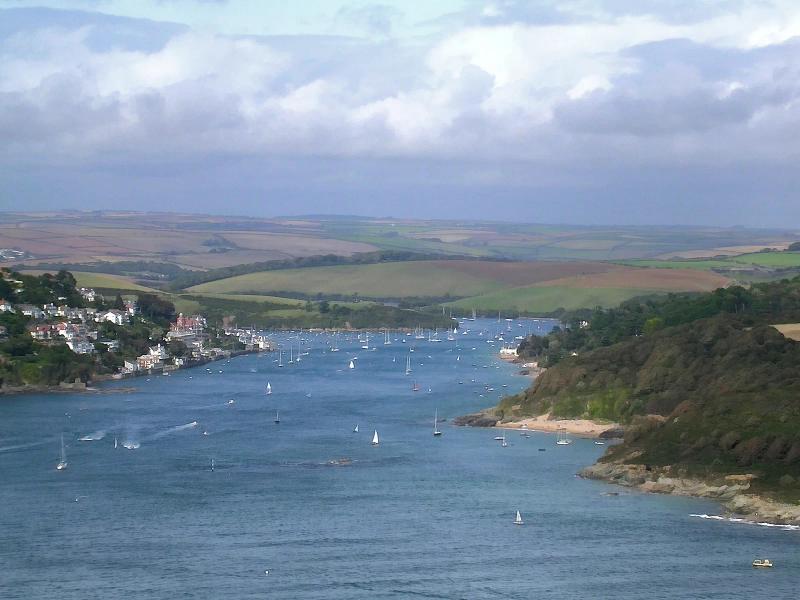
The estuary is the whole point. It is the reason the light is the way it is, the reason there are boats everywhere, and the reason the beaches face in unexpected directions.
Probably not — if you want a traditional seaside resort. There is no pier, no promenade of arcades, no long flat front to push a pushchair along.
The town is built into a hillside and you will feel it in your legs. Come in the first half of August without having thought about parking, and you will spend a portion of your holiday thinking about parking.
The one-line version: Salcombe rewards people who came for the water and the walking. It frustrates people who came for a resort.
What Salcombe Actually Is
Almost everyone calls it the Salcombe estuary, and technically almost everyone is wrong in an interesting way.
It is a ria — a river valley drowned by rising sea levels after the last glaciation. It is an unusually pure example, because no large river feeds it at all. The South Devon National Landscape describes it plainly: the Salcombe-Kingsbridge Estuary "is unusual because it has no large river feeding it, just a series of small streams from Frogmore, Bowcombe, Batson, East Allington, Sherford and other surrounding villages".
That single fact explains a great deal about the place:
- The water is essentially seawater all the way up. With no river pushing fresh water down it, "the estuary is almost entirely a marine system", which is why the habitats here are unusual enough to be protected.
- It is remarkably clear on a calm day — there is no river silt to cloud it.
- The tide reaches five miles inland, as far as the bridging point at Kingsbridge.
The shape of the land does the rest. Devon County Council's landscape assessment describes how "open water is juxtaposed with steep wooded valley sides that rise to rounded ridges", with "ancient semi-natural 'hanging' oak woodlands which descend to the water's edge".
Wooded slopes running straight into clear salt water, with creeks branching off inland. That is the view people come for, and it is not a view you get on most of the English coast.
The town sits inside the South Devon National Landscape — the designation called an Area of Outstanding Natural Beauty until all of them in England and Wales were renamed in November 2023. The name changed; the protection did not.
What Salcombe Is Good At
The water, in every form
Sailing, kayaking, paddleboarding, swimming, and simply being ferried about. Two passenger ferries cross the water and they are attractions in their own right:
- The East Portlemouth ferry runs year-round in open clinker-built motorboats, to the beaches on the far shore.
- The South Sands ferry runs seasonally, from late March to the end of October. It ends with a ride ashore on a sea tractor — a landing stage on wheels, built on an old army truck chassis, that drives out into the sea to meet the boat.
Children find the sea tractor considerably more exciting than anything else you had planned.
The beaches, if you accept they are small
North Sands and South Sands sit on the town side. Mill Bay and the East Portlemouth sands face them across the water.
These are coves rather than resort beaches — sheltered, sandy at the right state of the tide, and reached on foot, by ferry or down a lane. Several are genuinely good with a dog outside the summer restrictions, which we covered separately in our guide to Salcombe's dog-friendly beaches and the rules that apply to them.
Walking that starts at the door
The South West Coast Path runs straight through. The stretch west towards Bolt Head and on to Hope Cove is one of the most-walked sections in Devon, for good reason.
Inland, the creeks give you sheltered, low-level alternatives for a day when the cliffs are in cloud.
One properly good garden
Overbeck's, on the cliff at Sharpitor above South Sands, is a National Trust garden of subtropical planting terraced into the hillside around an Edwardian villa.
Bananas and palms growing outdoors in England, on a slope with a view down the estuary mouth. It is the single best wet-ish-weather afternoon in walking distance of the town.
Where Salcombe Will Frustrate You
Getting there is a commitment
There is no railway station, and there has not been one for a long time. The nearest is Totnes, under twenty miles away by road, with a bus link from outside the station and taxis available.
By car you come down single-carriageway lanes that were not designed for the volume they now carry. None of this is a reason not to come. It is a reason to plan the last hour of the journey rather than assume it.
Parking is the town's real bottleneck
Space is finite, the streets are narrow and steep, and in high season demand comfortably exceeds supply.
The practical answer is to choose accommodation with a parking space, then leave the car where it is for most of the week. The town is small enough to walk, and the ferries cover the water. Check current charges and long-stay options with South Hams District Council before you travel, as they change.
It is expensive, and known for it
Salcombe is repeatedly named at or near the top of Britain's most expensive coastal property markets. Lloyds' Coastal Homes Review named it Britain's most expensive coastal location in May 2024; in the May 2025 edition it came second, behind Sandbanks in Dorset.
That reputation shapes the town. It is why the shopfronts look the way they do, and it does feed through into what a week here costs.
It also shows up in the census. The parish recorded 1,584 residents in 2021, down from 1,909 in 2011 — a small town getting smaller on paper, in a place that fills up every summer.
August is genuinely busy
The population multiplies, the town regatta runs for its week around the turn of the month, and the lanes fill. If crowds are the thing you are trying to escape, come outside the school holidays.
When to Come
Late May to June is the sweet spot: long days, the ferries running, the gardens at their best, and the roads still passable.
September is the other good answer. The sea is at its warmest after a summer of heating, and the crowds have gone back to school.
July and August deliver the full picture-postcard version and the full crowds with it. Come then if you want the sailing scene at its liveliest and you have booked parking.
Winter is a different holiday entirely — bare, quiet, often spectacular, with the year-round ferry still crossing. People who love Salcombe in February really love it.
Who Should Book, and Who Should Not
| You will probably love it if… | You may be better elsewhere if… |
|---|---|
| You want to be on, in or beside water every day | You want a promenade, a pier and arcades |
| You walk, and want the coast path from the doorstep | Steep hills are a problem underfoot |
| You would rather eat well than eat cheaply | You are keeping a tight lid on the budget |
| You are happy to park once and walk or ferry | You need the car available all week |
| You are coming outside the peak fortnight | Only the first half of August works for you |
The honest test: if the sentence "we spent most of the week on the water and walking the cliffs" sounds like a good holiday, Salcombe is worth it. If it sounds like hard work, it is not.
Where to Base Yourself
Staying in the town itself puts you in walking distance of the ferries, the beaches and the restaurants. It is where most people should start — see the places to stay in Salcombe.
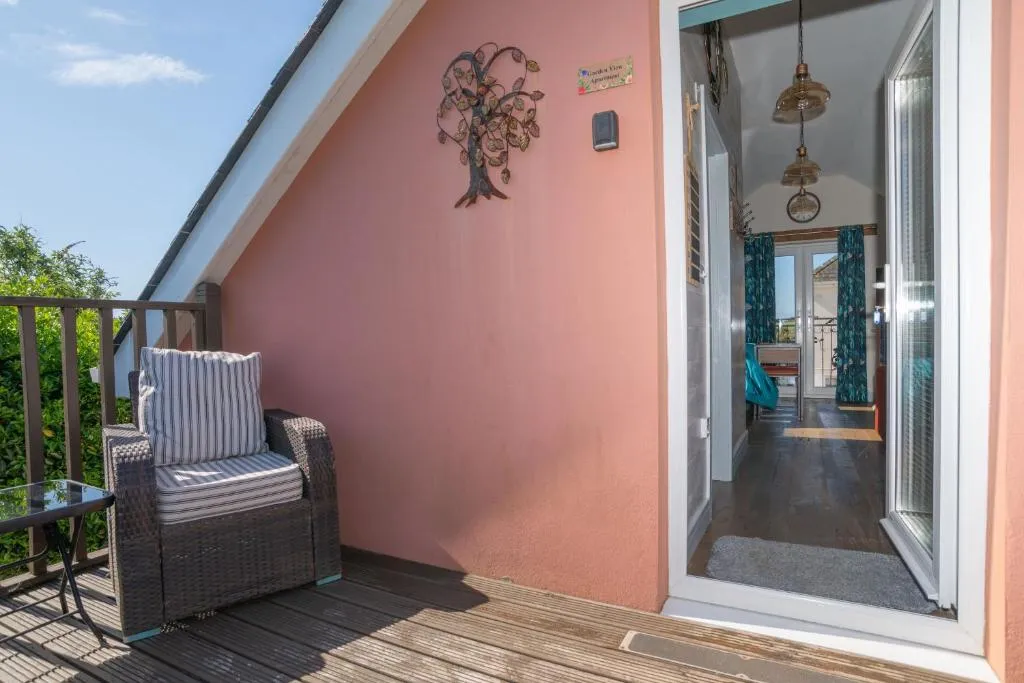
If the water is the reason you are coming: Salcombe — 2 bedroom flat, fantastic harbour views looks straight out over the harbour, which is the view this whole article is about. Rated 9.5 from 32 guest reviews.
If the town is booked out, or you want more room for your money, Kingsbridge at the head of the estuary is the usual answer — and it is a real working town rather than a resort.